
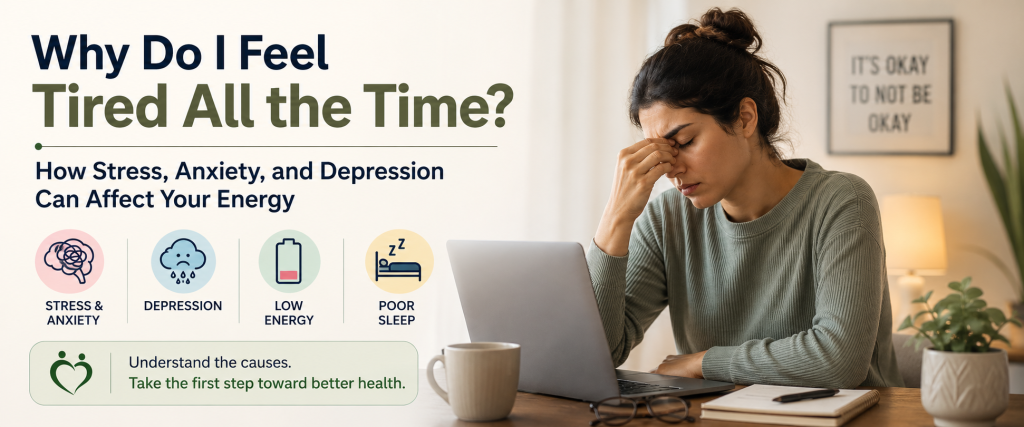
Why Do I Feel Tired All the Time? How Stress, Anxiety, and Depression Can Affect Your Energy
Feeling tired after a busy day is indeed normal. But it might be a serious issue when you constantly feel exhausted, struggle to concentrate, or wake up without feeling refreshed. There may be more behind low energy than a lack of sleep.
Stress, anxiety, depression, nutrient deficiencies, and certain medical conditions might all contribute to regular fatigue. Tiredness can especially be difficult for depressed people.
Depression can affect sleep, appetite, concentration, motivation, and energy levels. This is why it could make daily activities even more difficult. Keep reading to learn about the reason behind regular tiredness.
Why Do I Feel Tired Regularly?
Several reasons are there behind persistent tiredness. Although some are connected to daily activities, others may need medical attention. Let’s discuss the top of them:
Poor or Inadequate Sleep
Around 7 to 9 hours of sleep each night is important for most adults. The number of hours, however, doesn’t decide how rested you feel. An uncomfortable sleep environment, sleep waking, or conditions like sleep apnea may interfere with sleep quality.
Maintaining a regular bedtime and wake-time schedule is important to improve it. It would be best to reduce screen use and caffeine before bed for better sleep.
Stress and Anxiety
Chronic stress could also lead to physical and mental drain. It can be harder to relax and sleep properly when your mind stays active for a longer time. Anxiety can also have a similar effect when repetitive thoughts keep you awake at night.
Although stress and anxiety make restful sleep harder, poor sleep therefore increases tiredness. This cycle increases the feeling of tiredness.
Depression and Low Energy
Depression can also have a significant effect on energy. Regular low mood, loss of interest in normal activities, sleep problems, poor concentration, changes in appetite, and low motivation are its common symptoms.
Serotonin, dopamine, norepinephrine, and other neurotransmitters are thought to play a role in depression-related fatigue. Some people may also feel tired after sleeping excessively.
Speaking with a qualified mental health expert from Serene Life Hospital can be an important step if low energy happens with regular sadness, hopelessness, or loss of interest.
Nutrient Deficiencies and Diet
Your body needs proper nutrition to maintain energy. An unbalanced diet or nutrient deficiencies like iron and some B vitamins may also increase tiredness.
Depression can also affect eating habits. Although some people lose their appetite, others eat more during difficult emotions. Eating balanced meals with nutrient-rich food supports normal energy levels.
Too Much Caffeine
Coffee and energy drinks may indeed provide a temporary boost. But excessive caffeine may spoil sleep habits. You may feel more tired the next day, as caffeine makes it harder to fall asleep or reduces sleep quality.
Dehydration
Lack of fluid may also affect your feelings. Staying hydrated properly supports the body’s normal processes. It may also help prevent dehydration-related fatigue.
Can Medical Conditions Cause Constant Fatigue?
Yes, underlying health conditions could be the reason behind regular tiredness. Thyroid disorders, iron deficiency, diabetes, sleep disorders, and infections are among the fatigue-related conditions. Some medications’ side effects can also cause sleepiness.
It would be best to consult a doctor immediately if you have unexplained fatigue with long duration or if it affects daily activities. They can check your symptoms or decide if you need proper treatment.
How Can You Improve Your Energy?
Small changes in lifestyle could limit tiredness related to sleep, stress, or daily habits. You should therefore:
- Wake schedule
- Eat balanced, nutrient-rich meals
- Drink enough fluids throughout the day
- Reduce excessive caffeine, especially later in the day
- Add suitable physical activity in your routine
- Spend some time outdoors and get natural daylight
- Try relaxation techniques to manage stress
- Keep track of your fatigue, sleep,p and other symptoms
Professional support is important if it is related to persistent stress, anxiety, or depression. Therapy, medication, or a combination based on the person’s needs. You should never stop or change medications before consulting your therapist.
When Should You See a Doctor?
Although feeling tired occasionally is okay, constant exhaustion shouldn’t be ignored. You should consider speaking with a doctor if fatigue persists despite adequate sleep or disrupts daily activities.
Serene Life Hospital is also a good option for mental health care in Chennai. It offers professional mental health support and evaluation for people struggling with emotional distress, anxiety, depression, or persistent low energy.
Conclusion
Poor sleep, chronic stress, anxiety, depression, diet, dehydration, nutrient deficiencies, medications, and underlying health conditions may increase regular tiredness. Although regular sleep and some lifestyle changes can help, professional support is also important when the symptoms don’t improve after following helpful tips.
You should consider visiting Serene Life Hospital if you are based in Chennai. Our experts can evaluate your symptoms and suggest the right solution for persistent tiredness.

